
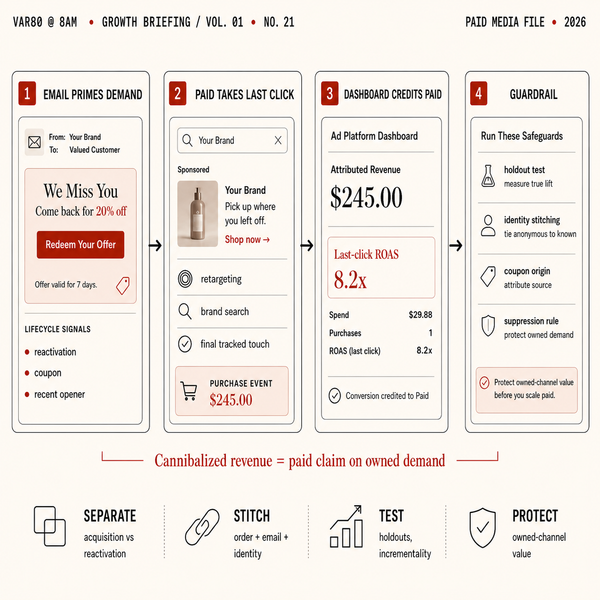
 Paid media can look like the growth engine when it is only claiming demand created by email. ROAS records visible conversions, not causation. Ecommerce teams need unified identity, holdout tests, and channel-level rules to see whether ads created new revenue or cannibalized owned-channel sales.
The ad account looks like the growth engine. It may simply be the last visible system in a purchase journey email already created.
TL;DR – Your Paid ROAS May Be Borrowed From Email
- Last-Click Attribution Rewards Visibility, Not Causation: Paid media often gets credit simply because it was the last tracked touch before purchase.
- Email Often Creates the Intent Paid Media Captures: Lifecycle flows, reactivation emails, cart reminders, and offers can prime buyers before a later ad click claims the sale.
- Brand Search and Retargeting Are Especially Vulnerable: These channels often convert already-warm buyers, so strong ROAS does not automatically mean they created net-new demand.
- Order-Level Data Reveals Cannibalization: Coupon origin, recent email activity, prior purchases, and session overlap help show whether paid media created the sale or merely captured it.
- Incrementality Tests Are the Real Proof: Holdouts and controlled experiments are the only reliable way to measure whether paid exposure produces additional revenue beyond owned-channel activity.
- Separate Acquisition From Reactivation: Build reporting that distinguishes net-new acquisition, reactivation, retention, and cannibalized revenue so budgets reward channels for the value they actually create.
The visibility paradox: Last-click makes paid media look like the creator of demand
Dashboards report the last visible touch. The analytics architecture embedded in ad platforms, web analytics, and many commerce integrations treats the final tracked interaction as the cause of a conversion. That design is a reporting decision, not a consumer causal story. It turns a visibility rule into a business verdict: whoever was visible last is credited for the sale.
This structural rule explains why paid channels so frequently appear to be the growth engine. When an email flow primes an inbox, but the buyer clicks an ad or finishes a session with a platform-tracked touch, the ad gets the revenue in the marketing ledger. The problem is not loyalty to email or malice from media buyers; it is that the attribution system rewards the final visible carrier of the purchase event.
Why visibility, not causation, drives credit assignment
Reporting systems are optimized for traceability. They track the last click, the last ad impression that matched a cookie or device ID, and the last redirect that contained an ad parameter. These are elegant engineering constraints: deterministic signals are easiest to record and reconcile. They are poor causal inference tools. Because the systems prioritise a stable, visible signal, they convert operational noise session timeouts, cookie resets, multi-device journeys into a single winner. The result is a market visible to ad platforms, not a market where causation has been established.
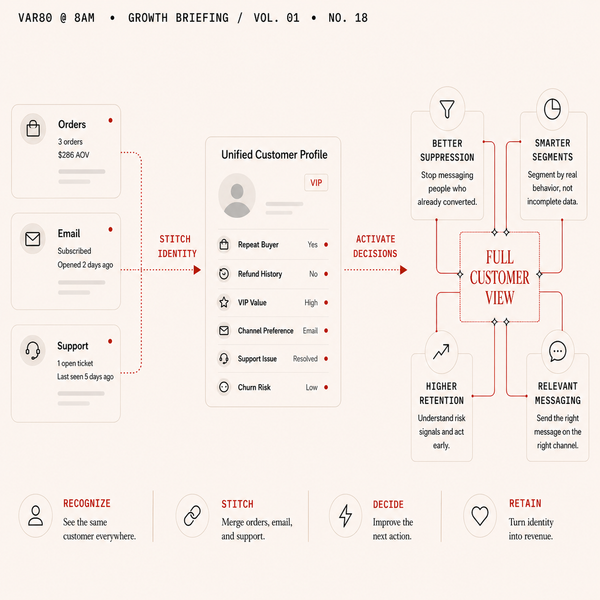
Klaviyo's benchmark work repeatedly shows that lifecycle flows generate predictable, recurring revenue in ways that single campaign sends do not; that stability creates intent that later surfaces as a tracked paid touch. Shopify's guidance on unified customer profiles argues that unless you stitch those signals into a single profile, you will repeatedly misattribute revenue across platforms. That misattribution is the visibility paradox: the ad platform sees the last touch and reports what it can see; that report becomes the KPI that teams optimize.
Failure case. This framework breaks when brands have a truly instrumented, server-side tracking stack where every touch is stitched to an identity before it hits ad platforms. In those rare setups, last-click dashboards still exist but they live inside an architecture that can reassign credit rationally. Most brands do not start there; they discover the mismatch when they try to reconcile email revenue with ad-reported revenue and see the paid channel's figures outpace what email reports.
Core mechanism: Email creates intent, and paid media captures last-click credit
The central mechanism is timing plus reachability. Email programs reach buyers with contextual messages: lifecycle flows, reactivation sequences, cart reminders and offer drops. An email sequence does the heavy lifting of aligning need, offer and urgency. The buyer is primed. When that buyer later sees a retargeting ad, a brand search result, or a social conversion creative, the ad is frequently just the visible carrier of a purchase already set in motion by email.
Reactivation is not acquisition and it short-circuits attribution
Reactivation events, whether a targeted flow from a CRM or a promotional broadcast, happen to buyers who are already known. The behavioural dynamics differ sharply from cold acquisition. A warm buyer requires less persuasive creative and lower friction to convert. That means the ad creative's marginal contribution is smaller, yet last-click systems will count the ad if it is the final tracked touch. Meta's incrementality tooling exists because social platforms recognise this problem: warm audiences convert more easily, and without holdouts you cannot know if an ad produced net-new buyers or merely captured pre-existing intent.
How offer timing and coupon overlap converts owned activity into paid credit
The most practical forensic pattern is offer overlap. An email sends a coupon or a time-limited discount. The buyer, primed, searches for the brand later or clicks a retargeting ad that shows the same offer. The purchase uses the coupon or a matching discount parameter. The ecommerce platform records the order and the ad platform records the last click. The paid channel's dashboard then reports the revenue. The causal event — the email that delivered the offer and provoked action — is invisible to the ad report. This is why order-level coupon origin, recent email-open metadata and session overlap are the most reliable signals that email created the intent and paid simply carried the final touch.
Failure case. When the email program is weak or the email lacked an offer, the ad may genuinely have changed the conversion probability. The operator must not universally assume cannibalization; the empirical question is whether the paid exposure produced marginal lift relative to a realistic holdout. That is an experiment; it is not solved by reading last-click dashboards.
Not all paid channels behave the same search and social cannibalize by different mechanics

Pretend for a moment you are the buyer. You got an email last week. Today you search for the brand, or you scroll social and see an ad. The mechanics that assign credit are different between channels because the last visible touch is structurally different. Paid search often matches an explicit intent query and reclaims credit from organic or email-driven discovery. Social retargeting is a frequency and recency game that captures warm cohorts. Those mechanics mean the remedy must be channel-specific.
Brand search bidding looks like new demand but is often rediscovered intent
Bidding on brand terms feels cheap and high-ROAS because the query already contains purchase intent. Many operators discover that brand bids simply reassign organic or email-attributed conversions to paid. In those cases the paid spend does not scale net-new demand; it captures demand that would have hit your site via an owned channel. Google Ads experimentation guidance explains how to separate capture from incrementality with controlled tests. When brand bidding is a reclaiming of queries your owned channels would have satisfied, the rational decision is to exercise restraint or to target brand bids at strategic tactical goals, not blanket acquisition KPIs.
Social retargeting is a demand-capture tool for warm cohorts
Social platforms convert using short exposure windows, high frequency, and creative that reuses product messaging across flows. That pattern makes them ideal at converting warm audiences email already reached: abandoned carts, recent browsers, and recent openers. Meta's documentation and pilot tooling for incrementality are explicit about this: retargeting moves warm buyers across the finish line but does not always create new buyers. The operational consequence is simple: do not pay acquisition-style prices for outcomes that are reactionary to owned-channel work.
Failure case. Social ads can also introduce products to new audiences via lookalike strategies that do generate net-new buyers. The rule is not never to run social acquisition but to measure the difference between rediscovery of owned intent and net new lift using holdouts aligned to reachability and recency.
What email teams actually see why reported email revenue falls when paid spend rises
Email teams are rarely wrong about what they see. They observe fewer orders attributed to their reports even while overall site revenue stays flat or increases. The most defensible forensic signals are session overlap, coupon origin and order metadata that show recent email opens. Those signals expose the truth behind last-click dashboards: an owned-channel event primed the buyer and a paid channel collected the visible click.
Reactivation vs acquisition reporting must be separate
Operators should create separate KPI buckets for reactivation and acquisition. Treating reactivation revenue as acquisition revenue can obscure unit economics. Recharge's subscription benchmark analysis highlights how confusing reacquisition credit with acquisition spending can inflate CAC for subscription brands and compress LTV calculations. Email teams must report reactivation efficiency, cost per reactivated buyer, and response rate by flow separately from net-new acquisition ROAS. Without that split, finance will overpay for rediscovery and underestimate the ROI of owned programs.
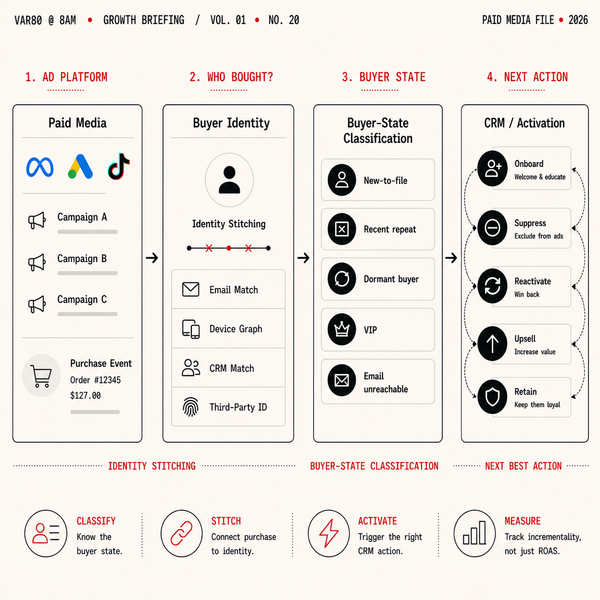
ROAS Is Not Enough. You Need to Know Who Actually Bought!--->
Session overlap, coupon codes and order metadata reveal cannibalization
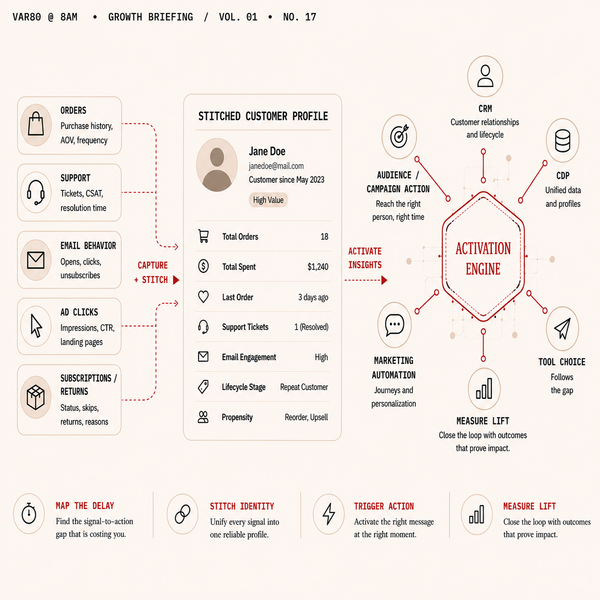
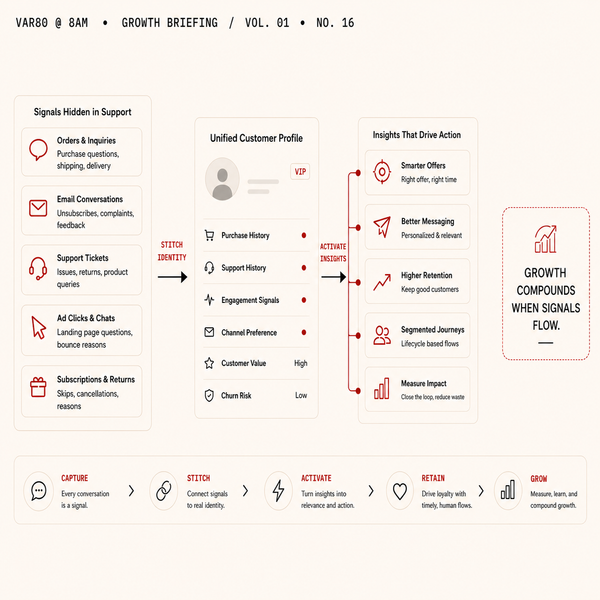
The practical forensic signals live at the order. A coupon created and seeded by a CRM, an order that includes a recently opened email event, a prior purchase that indicates a reactivation timeline. When those pieces live in the order record they tell a story that contradicts last-click dashboards. Shopify's enterprise guidance on unified customer profiles explains why stitching session, order and email events into one record is the only way to produce defensible attribution. When merchants push coupon origin into the order metadata and tag orders with recent email interactions, teams stop guessing and start measuring who actually created the intent.
Failure case. If your stack cannot reliably pass coupon origin or email-open metadata to the order record, the forensic work becomes noisy. The proper next step is engineering: instrument the payload so the order carries the provenance signal. That investment is essential before you spend cycles redesigning attribution rules that will be slavish to incomplete data.
Measurement truth: Holdouts, Incrementality tests and Unified reporting are the only way to separate lift from cannibalization
No dashboard trick substitutes for an experiment. The only way to tell whether paid spend produced net-new buyers is to run a controlled test that creates a valid counterfactual. Meta and Google both publish guidance and tooling for incrementality testing and holdouts because platforms know the problem is empirical: you must withhold exposure from a comparable cohort and measure the difference in outcomes.
Designing a holdout that separates reactivation from net new
The useful design moves are clear. Segment by reachability and recency rather than by broad audiences. For example, hold out only buyers who were recently reachable by email (say, opened an email in the last 60 days) and measure whether paid exposure increases conversions above the baseline of email-only engagement. That isolates whether ads are creating new buyers or simply finishing journeys email started. Meta's incrementality pilots show brands using similar logic to reveal that much of paid social's apparent lift dissolves when reachable, warm cohorts are held out.
Aligning CRM windows and ad attribution windows to avoid double-counting
Another routine failure is mismatched windows. CRM revenue windows often attribute a conversion to an email event inside a 14- or 30-day window; ad platforms use a click or view attribution window that may capture short-latency conversions. Reconcile these windows by defining a canonical revenue logic: decide which channel owns a conversion when multiple touches occur within overlapping windows, and then implement that logic in unified reporting rather than letting multiple dashboards separately claim the same conversion. Google Ads experimentation guidance explains design choices for lift testing; choose windows that reflect the customer journey and be consistent across tools.
Failure case. Holdouts are imperfect. They create customer experience trade-offs and require careful statistical design. Small merchants with limited sample sizes may not get clean lift signals. That is a budget and product constraint, not an excuse to accept last-click illusions. The alternative is to invest in improved identity stitching and larger, longer tests until the signal emerges.
Fix the operating model: Dashboards, Guardrails and Workflows that protect owned-channel value

Measurement alone is not sufficient. The operating model — how teams report, how offers are issued, and how audiences are suppressed — must change so owned channels keep the value they create. The dashboard must stop being a single ROAS readout that guides multi-channel budgeting. It must show four compartments: acquisition, reactivation, retention and cannibalized revenue. That change alters incentives immediately.
Move from last-click KPIs to a compartmentalized revenue view
Operationally, create a dashboard that shows acquisition revenue, reactivation revenue (seeded by CRM events), retention revenue and an explicit cannibalized bucket for orders that meet forensic criteria (coupon origin = CRM, recent email open, session overlap). Twilio Segment describes identity resolution as the layer that connects events before activation; use that layer to populate the compartments. When the dashboard displays these buckets side-by-side, teams no longer prize a single last-click ROAS number; they see whether paid spend is buying net-new customers or merely capturing owned reactivations.
Operational guardrails to stop paid rediscovery
On the workflow side, implement suppression rules and offer gating. Do not surface CRM-origin offers to audiences that are CRM-reachable. Enforce coupon origin so an owned offer cannot be reissued by an ad without a different coupon and a different business rule. Use CRM handoffs so that when a customer opens a reactivation flow the paid channel receives a flag not to serve rediscovery creative. Shopify and Klaviyo integrations make this practical: when order metadata and email events are aligned, a small engineering investment can automate suppression and coupon enforcement at scale.
Failure case. Guardrails add operational friction and require cross-team coordination. The common resistance comes from media buyers who fear inventory waste. The right response is data: show the cannibalization bucket on the dashboard and run a 30-day holdout against your largest paid channel to demonstrate lift or the lack of it. Once the finance team sees how much paid spend was paying to rediscover customers, the guardrails become easier to justify.
The commercial cost: When you don't fix cannibalization you overpay for customers and hollow out lifetime value
Cannibalization is not an accounting curiosity. It inflates CAC, compresses margins and destroys budgeting discipline. When the paid channel gets credit for revenue that email created, the business rewards paid channels for an apparent efficiency that vanishes as LTV and retention metrics are examined more carefully.
How cannibalization inflates CAC and shortens profitable payback windows
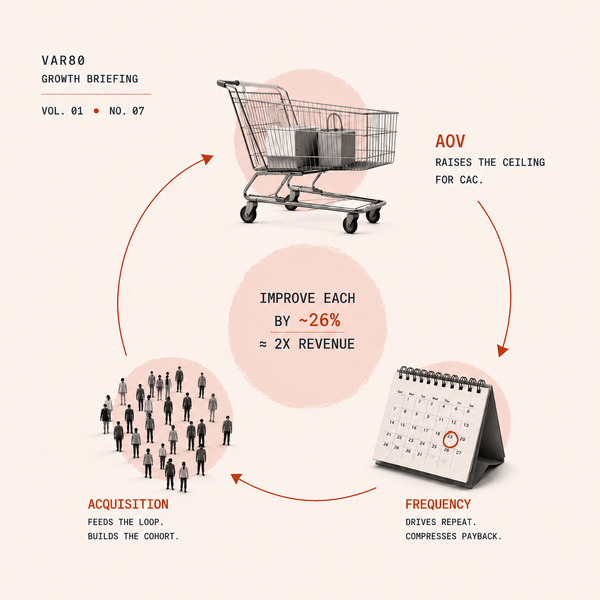
Imagine a mid-market Shopify retailer that runs heavy retargeting while its email program runs lifecycle flows and couponed reactivation. If 20 percent of the paid-reported revenue is actually reactivated email buyers, the true CAC is materially higher than reported. That misstatement shortens the payback window only on paper. Recharge's subscription benchmarks illuminate an obvious risk: for subscription and replenishment businesses, the unit economics degrade rapidly if reacquisition is outsourced to paid channels because the cost to reacquire a known buyer often exceeds the margin gained by the subscription item during the payback window.
The downstream effect on retention and subscription metrics
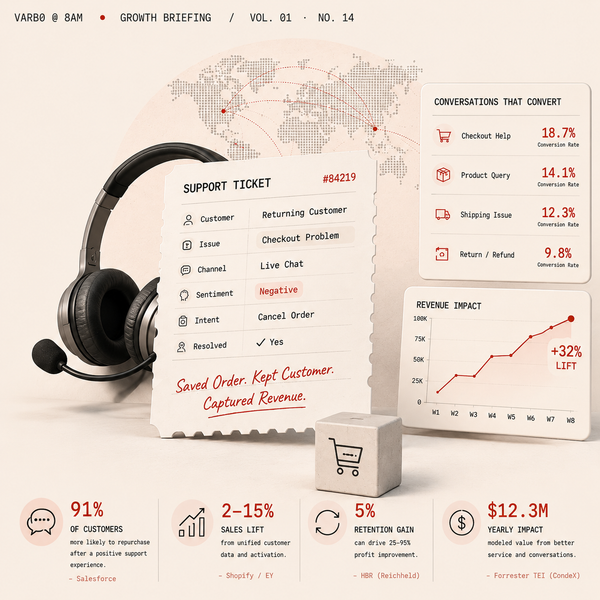
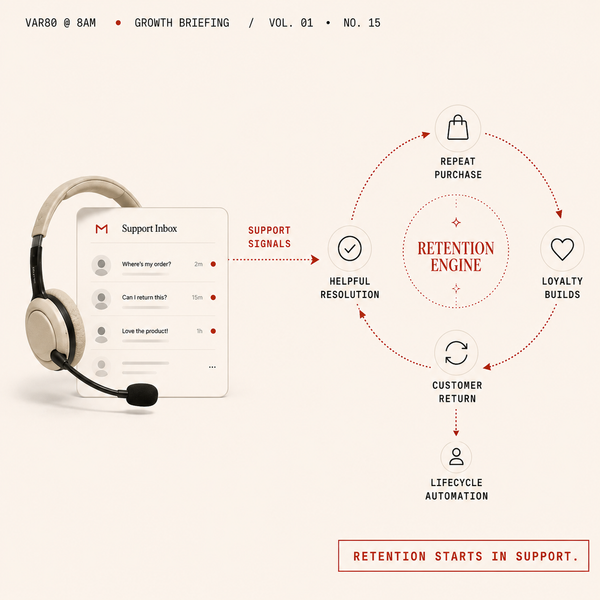
When reactivation is outsourced to paid channels, retention and churn forecasts become unreliable. Paid rediscovery can mask product issues that owned channels and support would surface. Zendesk's CX research links support and retention; when support signals feed into CRM segments and lifecycle messaging, brands fix friction points and reduce churn. When you pay paid channels to rediscover buyers rather than use owned remediation or lifecycle work, you pay twice: once in media spend and again in weaker retention because the underlying problems remain unresolved.
Failure case. If paid acquisition truly brings higher quality net-new buyers with better retention, then paying for that acquisition is rational. The danger is assuming that the shiny ROAS number proves quality when in fact the buyer was already owned. The corrective is measurement: run the holdout that isolates email-reachable buyers and then examine retention and LTV for net-new cohorts versus rediscovered cohorts.
The new rule for operators: Stop optimizing last-click ROAS defend owned-channel value with measurement and guardrails
Reframe the KPI. Pay channels should be rewarded only for demonstrated net-new lift; email should be rewarded for reactivation efficiency. The immediate operational directive you can run this quarter is this: design one holdout that isolates email-reachable buyers and run it against your largest paid channel for 30 days. Use reachability (recent email open or last 90-day buyer) as the segmentation variable. Measure revenue lift, then reconcile retention and LTV for the exposed cohort versus the holdout cohort.
Why this one action matters right away. It stops rewarding paid rediscovery with ad dollars. If the experiment shows little to no net-new lift, reallocate the spend to the owned program or to truly new-audience acquisition. If it shows meaningful lift, you have defensible evidence to scale that paid tactic with a proper price. Either outcome changes budget allocation immediately and protects owned-channel equity.
The single most important claim is that ROAS is a visibility metric, not a causal proof. Replace it with a two-track budget rule: one track funds paid channels for proven net-new lift, the other funds owned channels to maximize reactivation efficiency.
Final operational checklist, as prose: run a 30-day holdout that excludes recently email-open buyers from your largest paid channel; capture order-level signals (coupon origin, recent email open, prior purchase) in order metadata; build a dashboard that shows acquisition, reactivation, retention and cannibalized buckets; implement suppression rules so CRM-origin offers are not resurfaced to reachable buyers; and reconcile LTV and retention for net-new cohorts before making budget increases.
Failure case. This rule is blunt. Small brands, sample-size poor experiments, or technical debt in event plumbing will make a clean holdout hard. When that is true, the right investment is engineering to pass provenance and identity before repeating the test. Measurement is always the first operating expense, not an optional luxury.
By running one credible holdout this quarter, operators convert a recurring budget leak into an empirical decision. Stop giving paid channels credit for intent they did not create. Reward them only for lift you can measure.
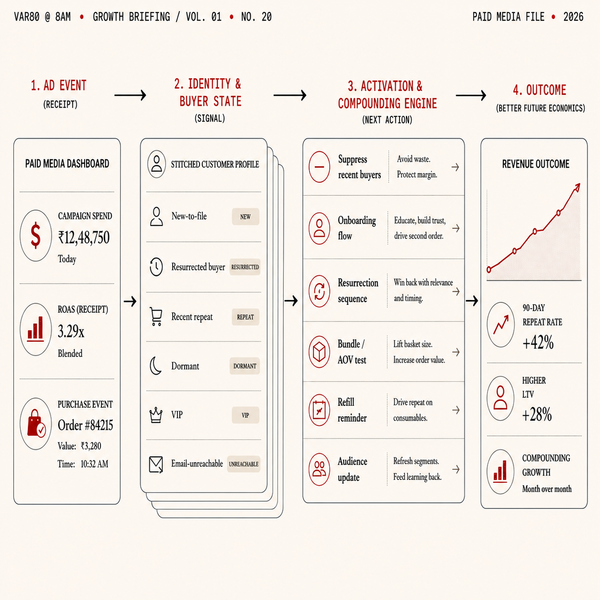
Read: How Paid Media Compounds Growth
Your Paid ROAS May Be Borrowed From Email
Var80 helps ecommerce brands separate acquisition, retargeting, email, CRM, and repeat-purchase revenue so you can see which channels create demand and which ones are only claiming it.


Leave a comment