

ROAS can show that paid media generated sales, but it does not prove the spend created new demand or better customers. Buyer-quality reporting separates new customers, returning buyers, dormant reactivations, and email-assisted purchases so ecommerce teams can see which paid orders actually improve LTV and deserve more budget.
ROAS tells you what sold. Buyer-quality reporting tells you what kind of customer the spend actually bought.
TL;DR – Paid Media Should Create Customer Intelligence, Not Just Conversions
- ROAS Tells You What Sold, Not Who You Bought: Every paid purchase should be classified as new, repeat, resurrected, or potentially cannibalized before judging campaign performance.
- Customer Resurrection Deserves Its Own Metric: Track dormant buyers separately using cost per resurrected buyer and 30/60/90-day repeat rates instead of treating them as new acquisitions.
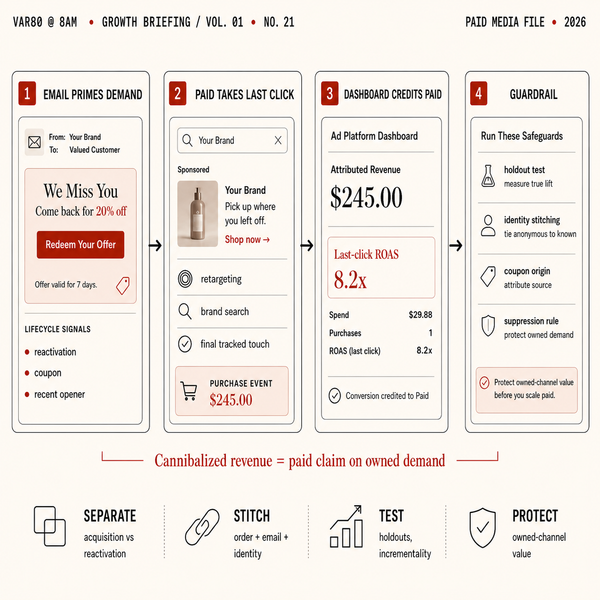
- High ROAS Can Hide Cannibalization: Paid campaigns targeting recent buyers or email-reachable customers can claim revenue that cheaper owned channels may have generated anyway.
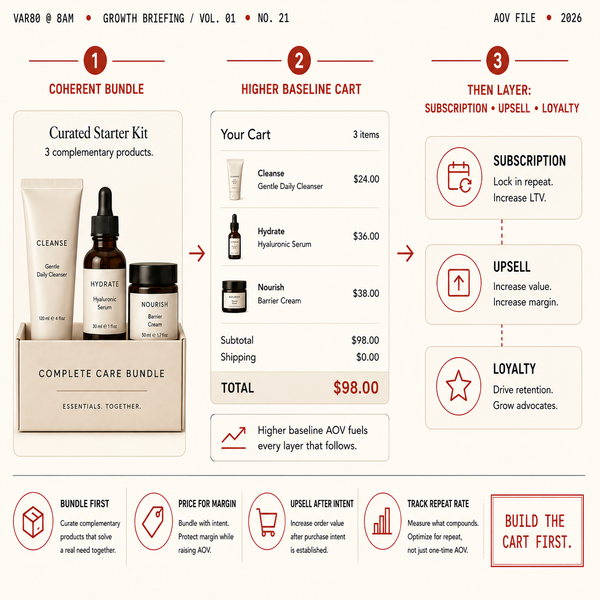
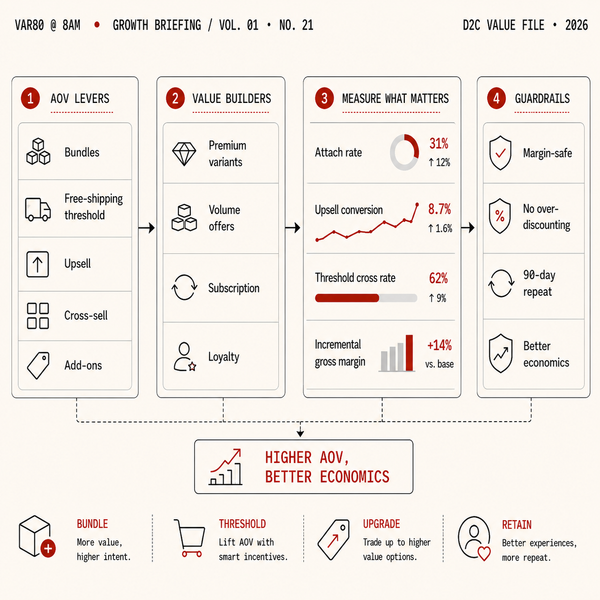
- Merchandising Can Matter More Than Creative: The right acquisition SKU, bundle structure, and AOV offer can improve campaign economics more than simply producing another round of ads.
- Live Customer Cohorts Make Ads Smarter: Refill-due, lapsed, VIP, and email-unreachable audiences let brands target and suppress customers based on their actual commercial state.
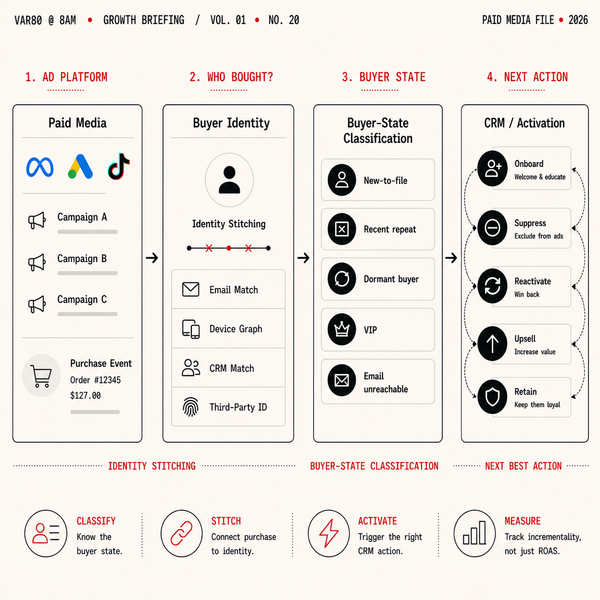
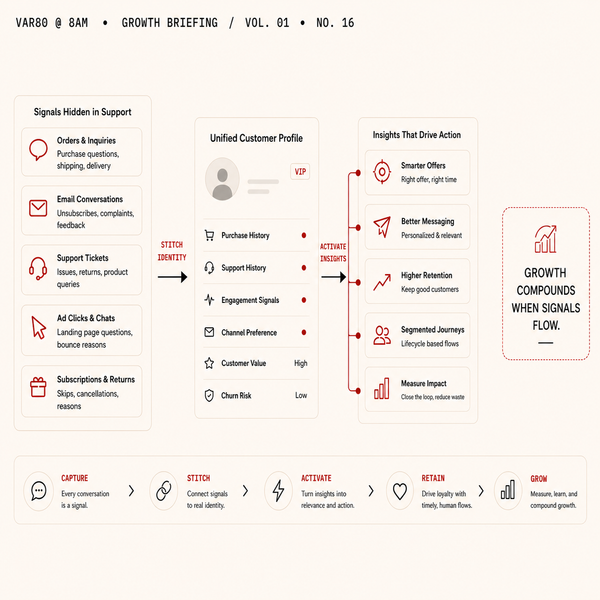
- Every Paid Purchase Should Trigger a Next Action: Feed purchases into CRM so they update customer profiles, suppression rules, lifecycle flows, support actions, and future audiences instead of ending as an attribution line.
Why campaign ROAS and incremental revenue diverge
Campaign ROAS is, in practice, a descriptive ledger: it reports the revenue a platform tied to an ad exposure. Incrementality asks a counterfactual: would that purchase have happened without the ad? The same ROAS number can represent three different business realities. First, it can be a cold acquisition: a new file customer who has never transacted and who expands your addressable base. Second, it can be resurrection: a long-dormant buyer returning, which is valuable but carries different retention expectations. Third, it can be cannibalization: a purchase that would have come through email, direct, or branded search. When brands treat receipts as growth, they confuse short-term efficiency with durable expansion. The practical consequence is routine: agencies and media teams get credit for revenue while the business gradually pays more to replace owned revenue it once counted on.
Public benchmarks and platform guidance already imply this separation. Klaviyo's benchmark data shows automated lifecycle flows frequently outperform one-off campaigns on revenue per recipient, which means that the channel that looks best for driving repeat value is frequently an owned-channel flow rather than a paid campaign. Similarly, Shopify's guidance on unified customer profiles treats the customer record as the control plane for deciding which purchases represent incremental demand and which do not. Put simply: if you cannot answer who the buyer is, your ROAS is a receipt, not a growth report.
One common failure mode is to celebrate a compressed CPA while ignoring that the marginal buyer cohort is shifting toward lower future value. That problem shows up as scale increases and spoken ROAS declines without a corresponding jump in healthy LTV signals. The only way out is to stop treating the purchase as the final metric and start treating it as an event that must update the customer profile and change the next action.
The First Paid-Media Question Is Not 'What Converted' but 'Who Converted'
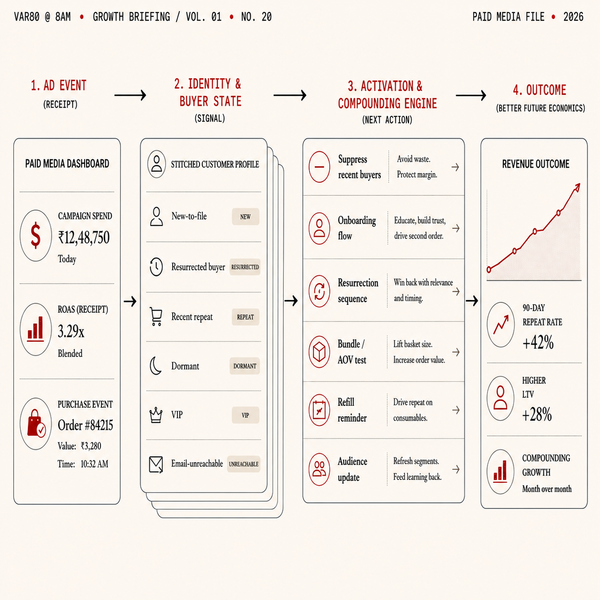
The most useful partition of paid purchase data is commercial, not behavioral. Two purchases look the same on a platform dashboard yet demand different responses: a new-to-file buyer who needs onboarding, and a two‑year dormant buyer who needs a reactivation sequence and a different LTV forecast. The failure to classify buyers by state converts media measurement into noise; the right classification converts every purchase into an operational decision.
A buyer-state taxonomy that predicts economic value
A small, operational taxonomy predicts near-term economic value and what should happen next. Classifying buyers into states such as New-to-file, Recent repeat, 30/60/90-day lapsed, 6/12/24-month dormant, VIP, and Email-unreachable is not academic. It changes whether you suppress, activate, or personally manage that customer. A new-to-file purchase justifies prospecting budgets and onboarding flows. A 30‑day lapsed buyer justifies a timed offer and product education. A 12‑month dormant buyer justifies a resurrection offer plus close monitoring of email reachability because many resurrected buyers are not back on your owned lists. Treating this taxonomy as a reporting nicety rather than an activation requirement is the industry’s recurring mistake.
The minimum ad→CRM fields that change decisions
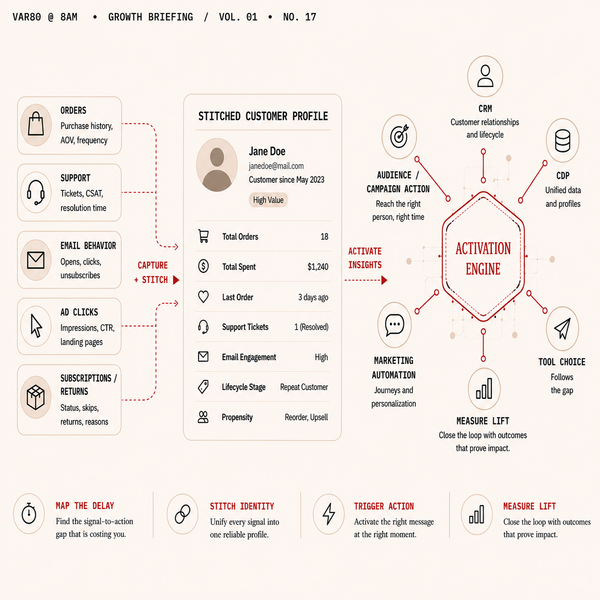
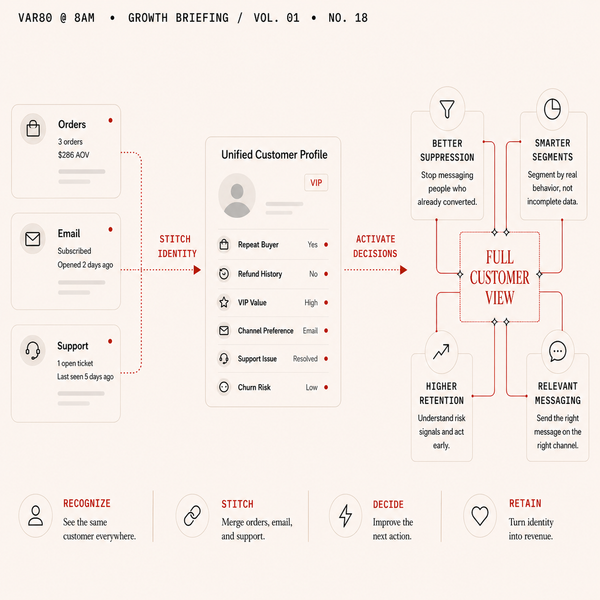
Not every data field is equal. The minimum fields that make an ad-driven purchase actionable are first purchase date, last purchase date, total orders, total spend, product history, email subscription status, and abandoned-cart history. Those fields let you move from a campaign-level ROI narrative to a buyer-level activation narrative. When those fields are present in the ad→CRM feed, media teams can suppress recent purchasers from prospecting, route resurrected buyers into special onboarding, and create lookalikes that reflect durable value rather than short-term conversion likelihood. Identity stitching matters because ad platforms see devices; a stitched profile sees the customer across devices and channels. Twilio Segment describes identity resolution as the layer that turns fragmented events into usable profiles for activation, and that is exactly what paid media needs to become a compounding system.
The operational tension is real. Many teams can technically export a purchase event, but too few export a purchase event with the context that changes the next action. The first paid-media question must become who converted, not simply what converted.
Customer Resurrection Deserves Its Own Line Item
Paid media that brings back long-dormant customers is not the same as cold acquisition. Resurrection has distinct economics: lower marginal CAC in some cases, compressed immediate LTV if the customer was low-value originally, but sometimes strong medium‑term returns if you can re-enroll the buyer into owned channels. Because resurrection sits between acquisition and retention, it must be measured and optimized separately.
How to measure a resurrected buyer
Define resurrected buyers concretely: a resurrected buyer is a purchase attributed to paid media from a customer whose prior purchase was beyond a pre-defined dormancy threshold such as six months, 12 months, or 24 months. The KPIs that matter are count of resurrected buyers, revenue by lapsed cohort, cost per resurrected buyer, and the post-reactivation repeat rate over 30/60/90 days. These metrics answer different questions. The count and cost per resurrected buyer tell you whether a defined budget line for resurrection is efficient. Revenue by lapsed cohort shows whether older cohorts are responsive to offers. Post-reactivation repeat rate shows whether resurrection is durable or a one‑off. That durability, more than the initial ROAS, determines whether resurrection should be funded at scale.
Klaviyo’s benchmark material highlights why lifecycle flows and differentiated buyer-state sequences outperform single-channel receipts. Klaviyo's benchmark guidance frames triggered flows as the right place to preserve and compound value from reactivated buyers, because automated sequences convert better than broadcast sends among buyers who already know your brand. That means resurrected buyers must go into different paths than cold prospects: a shorter onboarding sequence, a re-familiarization message, and a higher chance of human outreach if they are high potential.
One complication is attribution timing. If your attribution window is short and your suppression rules are loose, resurrection may be misclassified. The guardrail is simple: measure resurrection with a strict buyer-state definition and track its 90-day repeat rate. If resurrected buyers re-enter owned channels and repeat, resurrection is a compounding win. If they do not, you are paying to push a marginal one-off that will not help LTV.
High ROAS Can Hide Cannibalization. Incrementality Is the Guardrail.

Paid media can claim revenue that email, organic search, or direct would have generated. That happens when campaigns reach recent purchasers, email subscribers, or people who have already shown strong brand intent. A high ROAS in that context is an accounting win and an operational loss: the brand has substituted expensive paid conversion for cheaper owned conversions.
Reminder ROAS versus acquisition ROAS
Reminder ROAS is earned by reminding known customers to buy; acquisition ROAS is earned by persuading unknown customers to become buyers. The diagnostic difference is essential because the two outcomes should live on different budgets. If your prospecting budget is buying reminders, your lookalike and prospecting logic needs rework. Google’s product-level tools demonstrate how first-party lists and offline imports influence measured performance, which is useful for measurement but not a substitute for incrementality testing. Google's Customer Match and offline conversions guidance explains how list signals improve targeting and reports case uplifts, but those vendor-reported uplifts do not replace well-designed guardrails that prove whether the brand captured incremental demand.
Practical incrementality guardrails for mid-market brands
Incrementality need not be an enterprise-only exercise. Mid-market teams can install practical guardrails that detect cannibalization: enforce suppression windows for prospecting audiences of 30 or 90 days, run rotational holdouts where feasible for medium-sized cohorts, and compare cohort-level LTV for purchasers exposed to ads versus a matched unexposed holdout. Another pragmatic check is cohort LTV comparison: compare the 90-day repeat and AOV of buyers who arrived via paid channels versus buyers who arrived via owned sequences during the same period. If paid buyers show materially lower repeat rates and lower owned-channel re-engagement, your paid spend has eaten owned revenue. This is the strategic use of incrementality: not just to justify spend to finance teams, but to defend the cheaper, compounding owned channels that fund long-term growth.
Server-side measurement improvements can reduce attribution noise, but they do not prove incrementality. Meta's Conversions API documentation explains why server-to-server events reduce signal loss, and Google's enhanced conversions explain how hashed first-party conversions close browser gaps. Both are necessary for cleaner measurement, but both remain instruments for better inference, not substitutes for causal checks that separate incremental buyers from reminders and cannibalized conversions.
The Best Fix for Poor Ad Performance Is Often Merchandising, Not Creative
When a campaign underperforms, teams reflexively blame creative, audience, or bidding. Often the missing variable is the offer architecture: price ladders, bundle structure, SKU selection, and AOV mechanics. A small change in bundle framing can make an ad look substantially better overnight because it changes purchase justification, not persuasion.
Why bestseller ≠ best acquisition product
Bestsellers prove strength with an existing base; they do not always prove a product's acquisition role. A bestseller can win on repeat purchases and category familiarity but still be a poor first-product for new buyers who need lower cognitive friction or clearer problem-solution framing. The right test is not which SKU sells most overall; it is which SKU recruits new buyers fastest. A lightweight multi-SKU acquisition test of 10 to 12 products run under similar budget and creative will reveal the SKU that pulls new buyers most efficiently. Judge that SKU differently when optimizing prospecting budgets: it is an acquisition asset, not a retention workhorse.
How bundle share and AOV change audience economics
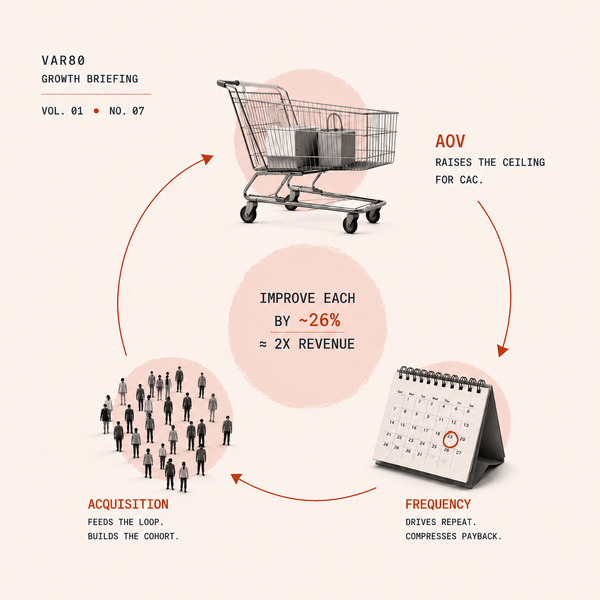
Bundle mix changes AOV and audience economics. When a pack-of-two share increases, marginal CAC for revenue declines and the lookalike signal quality changes because the buyer's initial spend is higher. This effect is not invisible. In one operating example, a pack-of-two price move increased pack share by roughly eightfold, and that product-level change explained much of the volume improvement that a media report otherwise credited to creative. If your ad account does not record SKU-level response and bundle share, you will misattribute merchandising wins to media and then scale the wrong levers. The correct practice is to read product-level share changes as part of media diagnostics and to treat merchandising tests as part of your media playbook rather than a separate commerce problem.
Audience Memory Live Customer Cohorts Is the Real Ad Engine
Anonymized pixels discover behavior. A live customer cohort executes commerce. The ad account gets smarter when it stops targeting generic traffic and starts targeting live customer states: refill cohorts, lapsed cohorts, VIPs, and email-unreachable buyers. Those audiences are dynamic signals of economic intent; they teach the system which offers, creatives, and bids produce durable returns.
Why live cohorts beat static lists for activation
A dynamic cohort that surfaces customers who are refill-due in seven days has a different commercial value than a static list of past purchasers because the dynamic cohort implies imminent repurchase intent. When audiences are alive and updated in near real time, buy/suppress/score decisions change. Identity resolution and stitched profiles are the technical prerequisites. Twilio Segment describes identity resolution as the connective layer that turns device events into usable customer records, which is precisely the infrastructure you need to export live cohorts into ad platforms and protect owned revenue while improving targeting for high-propensity buyers.
Shopify frames the unified customer profile as the place where purchase history, product interactions, and contact status live together. Shopify's unified profiles make it straightforward to export refill cohorts and lapsed customers for activation. The operational advantage is straightforward: live cohorts make suppression precise, prevent paid spend from buying the same buyer twice, and turn paid signals into measurable audience improvements for future campaigns.
Every Paid Purchase Should Trigger a CRM Action, Not Just an Attribution Line

The true compounding effect of paid media arrives when purchases immediately change downstream workflows. If a purchase simply appears in a reporting dashboard and nothing else changes, the signal decays into noise. The purchase must update segments, change lifecycle flows, inform support priorities, and adjust paid suppression rules. When that happens, paid media stops being an isolated channel and becomes the sensor network that drives retention and lifetime value.
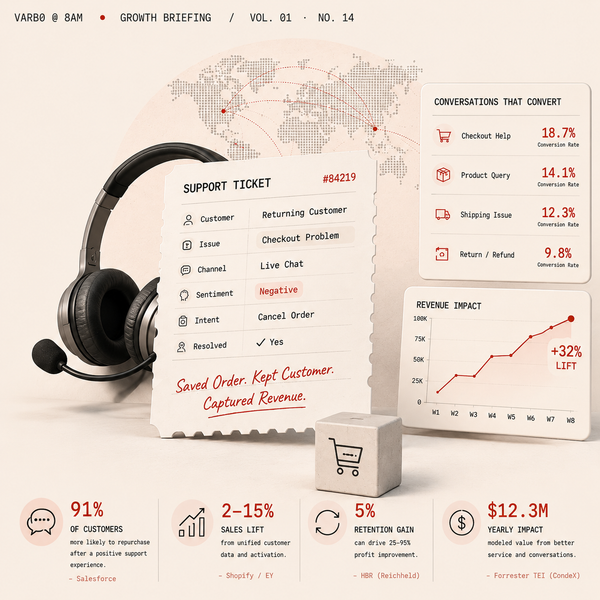
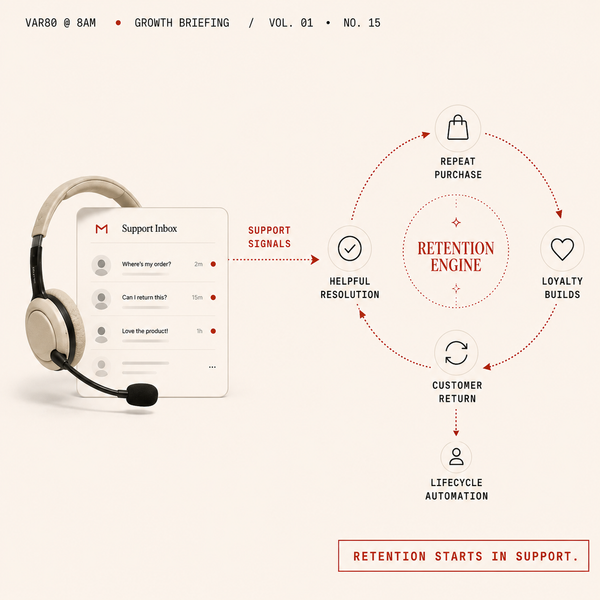
Turning support into a revenue desk
Support should not be merely a complaint center. Reframe it as a revenue desk that identifies high-probability recovery moments such as abandoned carts, refill gaps, and VIP check-ins. Zendesk's research frames customer experience as a contributor to loyalty and repeat purchase, positioning support as a source of revenue outcomes rather than a cost center. Zendesk's CX reports show how responsiveness and quality correlate with retention, which means support can and should be measured by recovery and upgrade metrics when it treats inbound tickets as signal rather than noise.
Low-lift automations that compound purchase intelligence
Simple automations compound quickly. Three low-lift rules change outcomes across the funnel. First, purchase-suppression after a defined window stops paid prospecting from buying the same recent buyer twice. Second, a resurrected-buyer onboarding sequence acknowledges the gap, confirms product usage, and invites owned-channel subscription; this sequence materially increases the probability of the second purchase. Third, a timing-based refill reminder that reads product history and expected consumption windows recovers otherwise lost purchases. These automations are not theoretical. They turn ad events into lifecycle actions that change the probability distribution of future purchases and make paid spend a discovery input for retention engineering, not only an attribution line on a dashboard.
If Every Click Doesn't Teach the System, Your Spend Won't Compound
Google and Meta now encourage brands to send richer first-party and offline signals because better signals improve measurement and optimization. Google's Customer Match and offline imports and Meta's Conversions API are explicit about how first-party data reduces measurement loss. The competitive advantage is not merely implementing these APIs; it is closing the loop so every paid event updates the unified profile and drives a next-best-action.
Designing a face-on-the-buyer ad dashboard
A face-on-the-buyer ad dashboard surfaces the buyer state, SKU or bundle response, email reachability, and next-best-action. That face must answer operational questions: should this buyer be suppressed from prospecting, moved into a resurrected-buyer flow, given VIP treatment, or routed to a human in support? The dashboard must combine platform receipts with CRM fields and product-level response so that media, CRM, and support can coordinate on one narrative. Technical building blocks include server-side conversion imports for measurement fidelity, identity stitching for consistent profiles, and event streaming to ensure low-latency updates. The point is not tooling for its own sake. The point is that when every click becomes an event that changes a profile and a workflow, your paid media begins to compound across cohorts and offers, and that compounding is the growth engine proper.
One public performance anchor is instructive. Google reports case studies where Customer Match and offline imports produced sizeable uplifts in conversion efficiency for some advertisers; the case data show that better first-party signals improve measured conversion and can materially lower CPA in practice. Google's ImmoScout24 case study reports a 52% conversion-rate improvement and 15% lower CPA after integrating Customer Match in that instance. That kind of vendor-reported uplift is not the final word on incrementality, but it is a clear example of why improved signal fidelity is a necessary condition for a compounding ad engine.
Stop Measuring Purchases; Start Measuring the Actions You Can Take This Quarter
The uncomfortable truth is this: scaling spend without changing how purchases feed CRM and audiences magnifies waste. The real test this quarter is not a higher ROAS. It is whether one paid purchase changed one downstream decision.
This quarter implement two rapid experiments and treat them as the primary success criteria rather than an efficiency headline. First, enforce a 30/90-day suppression window for prospecting audiences and measure how many prospecting conversions would have been suppressed, how prospecting ROAS changes, and whether owned-channel conversions rise as a result. Second, run a defined six‑month-lapsed resurrection test with distinct creative, a resurrected-offer bundle, and a resurrected‑buyer onboarding sequence; measure cost-per-resurrected and the 90-day repeat rate. These two experiments force teams to stop accepting receipts as growth and start treating paid purchases as events that must change next actions.
Var80’s operating claim is simple and decisive: paid media is no longer the end of the funnel. When you close the loop so that ad events update a unified profile, suppress the right audiences, trigger the right flows, and inform product-level merchandising, you convert an advertising budget into a compounding intelligence engine. The brand that wins is not the brand that throws more spend at known audiences. It is the brand that knows what kind of customer each dollar bought, what product pulled them in, which channel deserves credit, and what should happen next.
Turn Every Paid Buyer Into a Growth Signal!
Var80 helps ecommerce brands connect ad performance, customer behavior, CRM segments, and post-purchase workflows so paid media does not stop at conversion, it keeps improving retention, AOV, and repeat revenue.


Leave a comment